TIL You can quit your job and still have no free time 🫠
Fresh feelings on the first 2 months of a sabbatical.

Wait what?! It’s been 2 months since I quit my job? Goodness. The year flies by like the years fly by.
When you take a year off of work to focus on music and drawing, you’re supposed to feel like you have all the time in the world, right? Parkinson’s law has always rung true to me but I didn’t realize that I’d feel it most when I didn’t have a job. When not working, what’s the stuff that fills that work time instead?
That’s not to say my last couple of months haven’t been rewarding. I fit in a trip to NYC and had the time to help out my family in ways that I otherwise wouldn’t have. But, while fairly productive, so far my sabbatical hasn’t been the pencil-heavy, saxophone-laden hermitage I had planned for.
I didn’t realize how much I’ve relied on work to block off my time from others…Similarly, I didn’t realize how much I relied on my work calendar to block off my time from others at work.
For one, I didn’t realize how much I’ve relied on work to block off my time from others. Whether it was my dad inviting me out for Dahl Gosht in the middle of the afternoon or a contractor asking me to pick up some cabinets, work has always given me an easy out. Of course I can’t break out in the middle of the day to run an errand or for a lunch break. I’ve got work. And work was an excuse that was often held up in high regard. Call it the remnants of the American dream or the shadow of the protestant-work ethic, family and friends “understood” that work was a respectable, unmovable block of time for me. Anytime I would tell my dad that I was unavailable because of work, he would defend this unavailability to my mom and anyone else within earshot. Don’t disturb Sajid right now. He’s got work to do. And work? Work is very important. And it was easy for people like my dad to assume that this work was important work even when they understandably couldn’t describe the work I did.
Similarly, I didn’t realize how much I relied on my work calendar to block off my time from others at work. Within the bounds of my job, I could spin up a calendar event to carve away focus time for myself or just time for lunch. Now that my calendar isn’t visible to those around me, I’ve got to make sure my schedule is clearly communicated to my partner and the other people that populate my day.
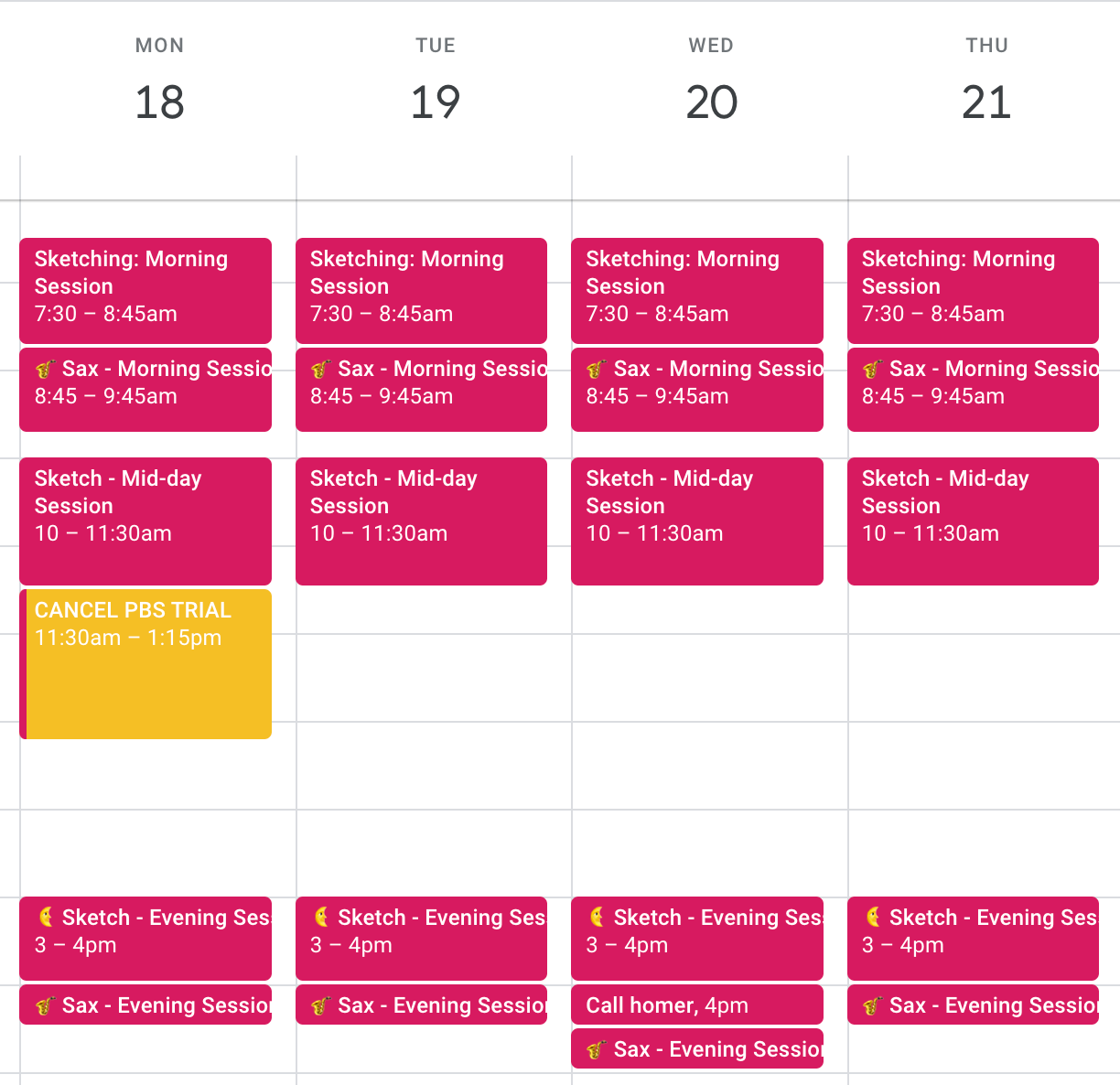
All this is to say that these past two months (60+ days!) have been a great exercise in setting boundaries, expressing my needs, and keeping these boundaries and needs guarded even when they’re squishy and subject to change. Sorry, I can’t come over this morning because mornings are when I find it easiest to sit down and draw. Well, that’s at least what I’ve found to be true so far but we’ll see. No, I’d rather not go out tonight because I’d like to get to bed. But, heads up, I struggle with screen time and I might end up going to bed at midnight anyways. The absence of official work, which, lets be real, isn’t always really work anyways, has been pushing me to be more direct about what I want and need while also exposing my shortcomings to those around me. It hasn’t been easy and has been far from perfect. But it feels like growth. And it feels pretty hard. But it feels kind of good.
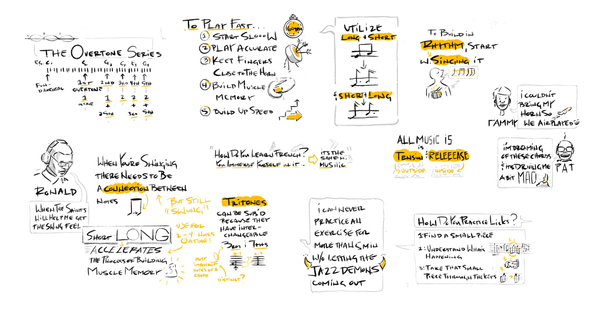
3 bits on drawing and jazz…
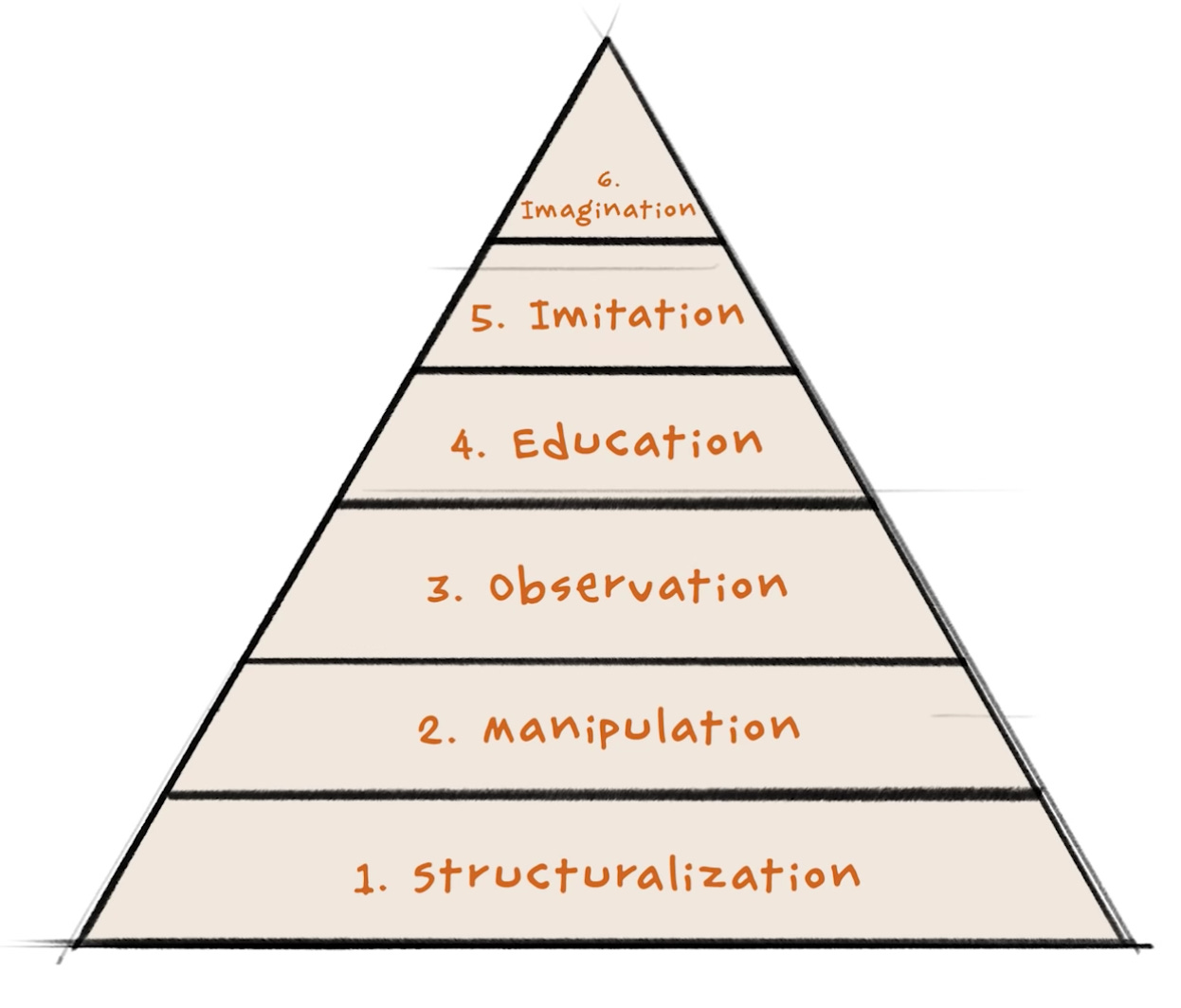
While wrestling with how to sequence the skills I focus on in sketching, I ran into this framework from Antonio Stappaert’s that focuses on a hierarchy of skills as opposed to a strict sequencing. Frameworks like this resonate with me because they provide the space to check my progress towards a goal(i.e. the top of the pyramid) while spending the bulk of my time on the foundational skills I might need to get there. I find this type of progress checking especially useful when I’m studying alone and I don’t have a teacher or coach to check my progress with. Is there a similar framework for learning jazz(or any other type of) saxophone?
From Antonio Stappaert’s fantastically methodical How to Draw Anything I spent some time this week doing master studies(copies!) of work by John Grello. Specifically, I've been trying out a technique I'm calling sandwiching where I 1) draw a lay-in in a red pen, 2) bring that lay-in into Procreate so that I can overlay it on top of the original reference, and then 3) use an overlay as a new reference to finish up my drawing back in pen. The first two steps are based on a trick from @stanprokopenko(🙏) but the additional last step(the second slice of 🍞 if you will) has been giving me a good way to take the study a step further and practice working with the original artist's style. In jazz, transcribing and studying jazz standards seems to provide a similar framework for internalizing the approaches of the artists that have come before you. What makes a culture-wide standard like this emerge in one field (e.g. jazz) and not another?
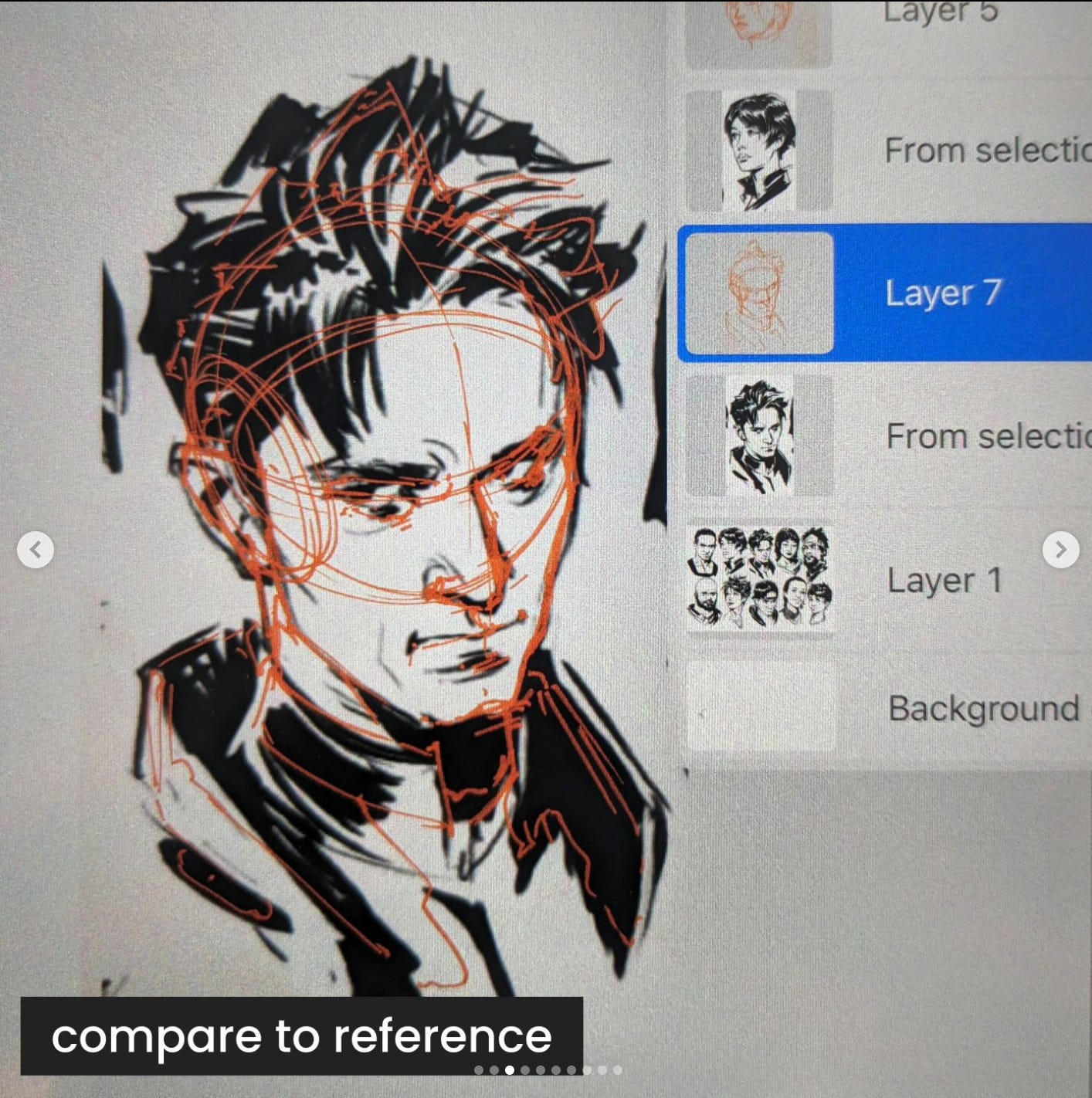
A study(a copy!) of work by John Grello And jazz. Jazz is a deep deep well. Though I’ve found a couple teachers that are helping me find my way, jazz remains dark and mysterious. One of my teachers, a student at NCCU, was lamenting that school was getting in the way of his practice time. When I asked him about it during our lesson, he explained that he usually liked to play 10 - 12 hours a day but, because of his class load, he could only sneak in 3 - 4 hours. A deep deep well I say. To scope down my ambitions on the sax, I’ve decided to focus my studies specifically on learning to play the blues while picking up standards along the way.
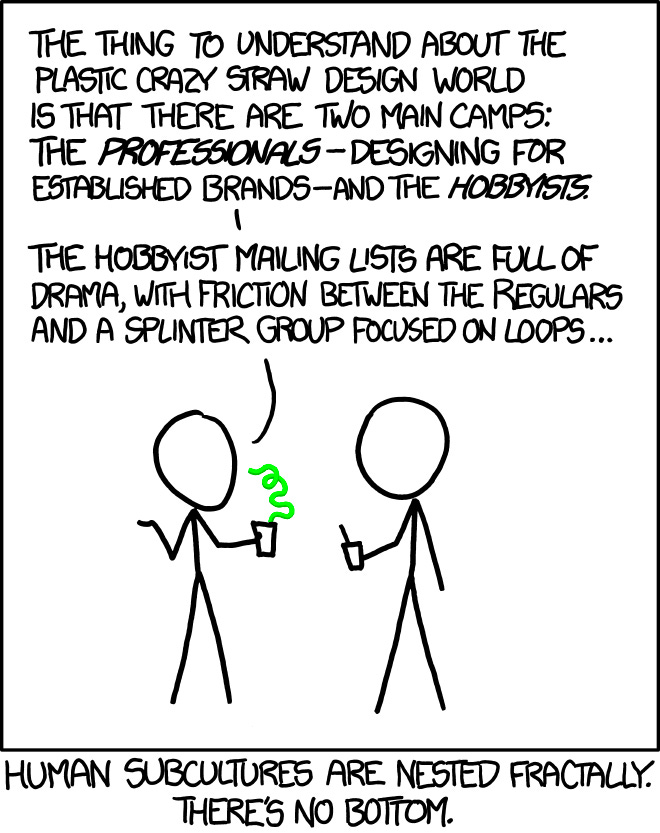
While, I love how any field can open up into fractals of other fields, the tricky bit for me is finding a map through it all that don’t melt my brain. (Via XKCD)
A quote I’ve been pondering…
“A river of material flows through us. When we share our works and our ideas, they are replenished. If we block the flow by holding them all inside, the river cannot run and new ideas are slow to appear.”
― Rick Rubin, The Creative Act: A Way of Being
And a thought caught as a haiku.
Fear, a shape shifter,
Hides with hope that I’ll find her,
So that we can rest.
- ✌️🕊