Art is not (k)raft. But macaroni can be art 🧀.
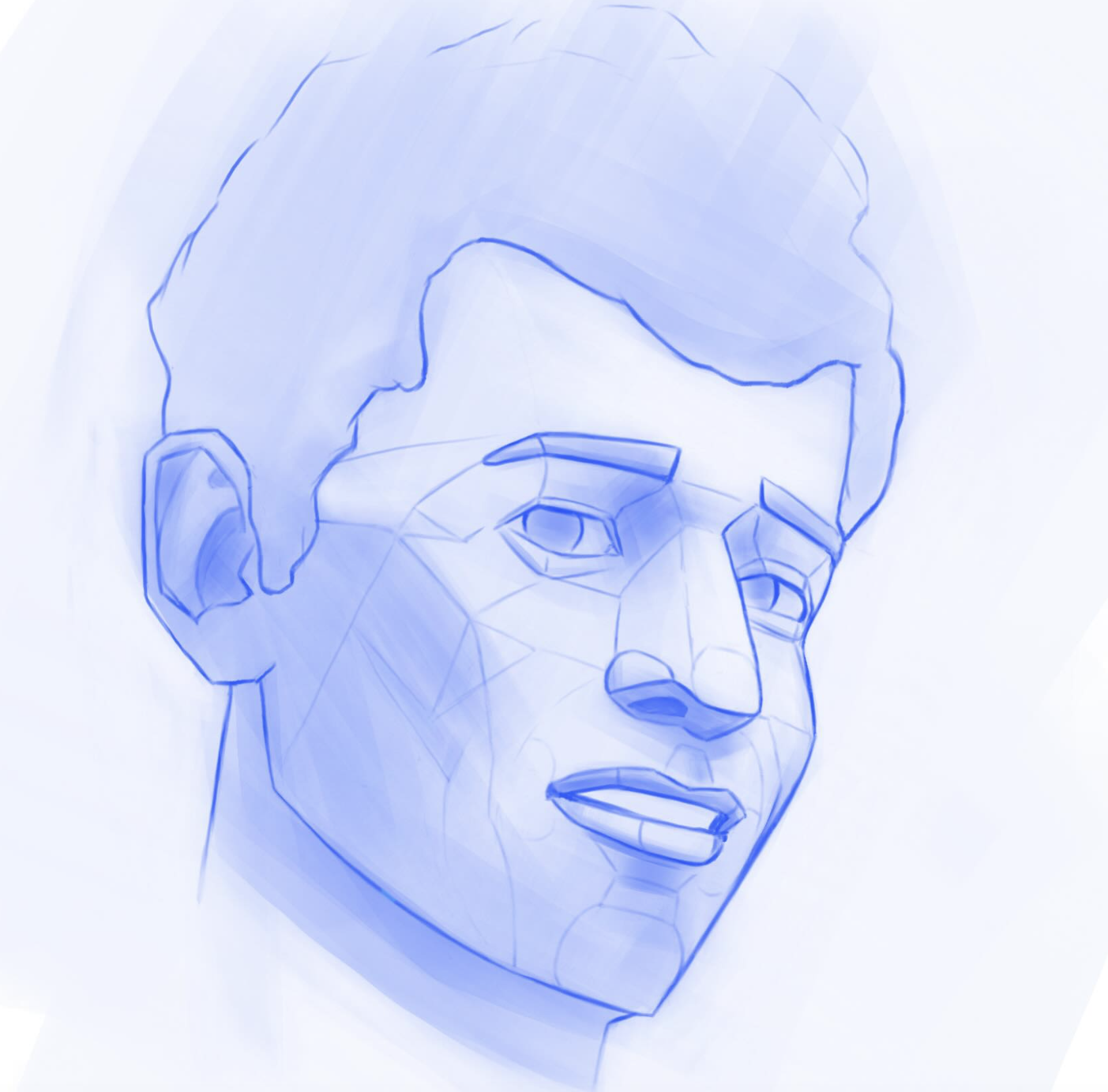
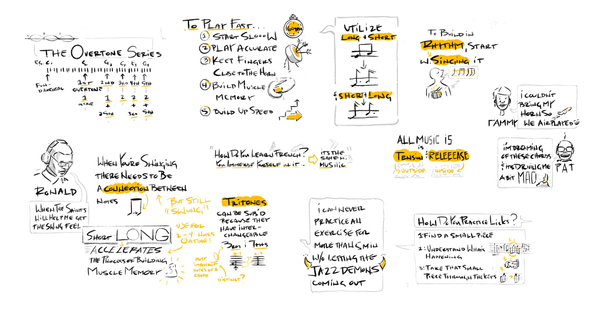
I haven’t really been making too much art. Well, not really in the way that I’d imagined. Instead I’ve been clocking hours on the craft side of drawing and playing saxophone.
Specifically I’ve locked in on putting in at least 3 hours of drawing and 90 minutes of saxophone a day, 6 days a week. I'm also careful not to spend more than an extra hour on either practice each day. Adding in these lower and upper limits into my practice has both helped me feel like I’m putting in the work to make progress and kept me fresh and excited to get started in the morning . So far its lead me to fantastic progress in my skill-level in both areas. But what it hasn’t really lead me to is making more art.
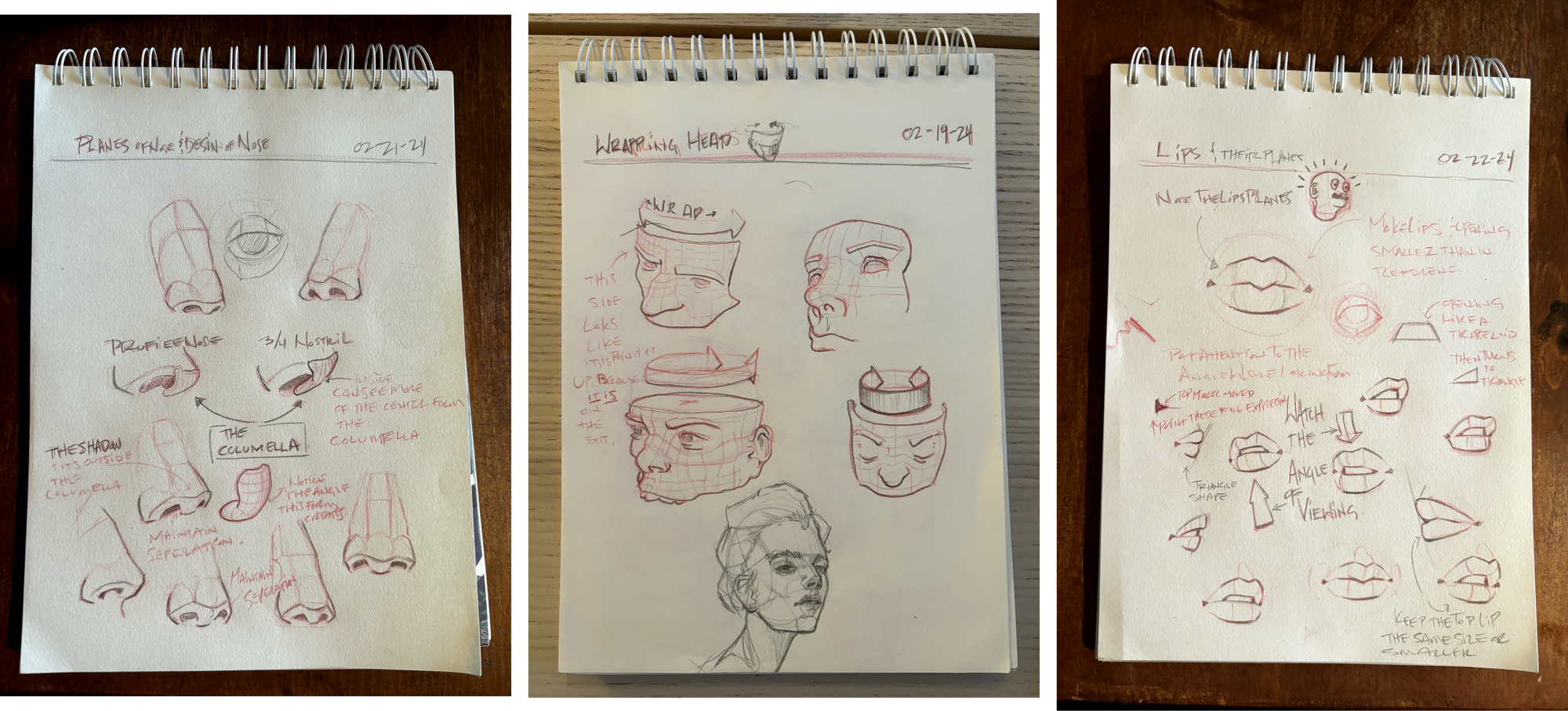
In some ways, it feels like this skill-building is me working on my voice before stepping out to speak out loud. And it does feel true that building a strong vocabulary and vocal range can let you more clearly articulate your ideas to both yourself and others. For example, over the past couple months, I feel like I’ve become much more expressive in playing the sax in a way that resonates for both myself others around me. But its only because I’ve been working on my scales and chord progressions that I’m able to take turn an existing song into a medium of self expression and maybe just a smudge of entertainment.
At the same time, I’ve also noticed that working on my craft has been an easy way to avoid saying whatever it is that I might want to say to a wider group of people. Its easier and it feels safer to spend time following a well-trodden path towards learn a skill that you know you can develop.
More and more, I’m also questioning how skill building is necessary for me to express myself. Some of my favorite artists have created what I find to be their most evocative pieces while working within the constraints of whatever skills and things they had on hand. Whether its a web-comic or an art installation, the works that speak to me rarely fit the mold of a particular craft and a singular well-defined skill. All of this has made me think that that in some ways, maybe its useful to see constraints, wether its in materials or capabilities, less as limitations and more as unique characteristics of a voice that can give it its human qualities.
maybe its useful to see constraints, wether its in materials or capabilities, less as limitations and more as unique characteristics of a voice that can give it its human qualities.
Charlie Parker famously said that, when learning how to play jazz, you should “learn the changes and then forget them”. Or simply that its worth taking the time to learn the structure and chord changes of a jazz standard but, when it comes time to improvise over top of that same song, we can let go of what we’ve worked so hard to memorize.
While I don’t think I can fully trust my subconscious to carry all the lessons of the craft I’ve learned along the way, I do think its worth experimenting with ways to let go of any tendencies towards learning the “how” of a medium as opposed to creating a brand new, potentially medium-less “what”.
So for the next 2 weeks I’m going to carve out daily time to create without “thinking about the changes” or consciously thinking about the craft I’ve been learning. I’m not usually one to let go but maybe that’s more reason to give it a shot. Lets find out.
3 things I’ve learned about drawing and saxophone
- The most impactful update I've made to my drawing routine has been to trace lines for 20 minutes. Straight up tracing. The BASICS. Hey brain! Stop paying attention to the bright and shiny new things! Transcription(listening to and then copying and playing a song) is like the tracing of the music world and I’ve really just started giving it a shot. What is the equivalent of tracing in design? In inter-personal communication? In relationships and spiritual development?
- In the same way that there are 5 types of shadows, in western art, it’s generally agreed that there’s a 4 types of edges: hard, firm, soft, and lost edges. Another list of 3 - 5 things! I often find myself turning away from things like this, but they always end up being useful to keep my monkey brain from getting lost in detail.
- Lately I’ve been thinking of illustration as the impossible job of taking the 3 dimensional world of objects and the multi-dimensional world of ideas and flattening them onto a 2d picture plane. This framing helps me see all the techniques to pull this off as a series of shortcuts and cheats. And if everything is a cheat than every technique is in-bounds and there is no such thing as a cheating (except, you know, stealing from others).
A quote I’ve been meditating on:
“I think what we fear most about finding a mind equal to our own, but of another species, is that they will truly see us—and find us lacking, and turn away from us in disgust…We will have to confront, finally, what we truly are, and the damage we have done to our home. But that confrontation, perhaps, is the only thing that will save us. The only thing that will allow us to look our short-sightedness, our brutality, and our stupidity in the face, and change.”
― Ray Nayler, The Mountain in the Sea
And a short haiku i wrote:
Love is a rabbit.
Born wild with legs compressed.
The forest awaits.